Two species, two characters
Almost all the world’s coffee comes from two plant species: Coffea arabica, or Arabica, and Coffea canephora, usually sold as Robusta. Arabica prefers higher, cooler altitudes and is more sensitive to weather and pests. Robusta thrives in lower, warmer regions and, as the name suggests, is much hardier.
The beans look different too: Arabica beans are more elongated and oval with a curved crease, Robusta beans smaller and rounder with a straight crease.
Taste: aroma and acidity versus body and strength
Arabica stands for aromatic variety: floral, fruity and sweet notes, a fine, lively acidity and less bitterness. Robusta brings body, strength and a pleasant bitterness, often with notes of cocoa, grain or dark chocolate, and hardly any acidity.
- Arabica: aromatic, refined, more acidity, less bitterness
- Robusta: strong, full-bodied, low acidity, more bitterness
- Robusta contains roughly twice as much caffeine as Arabica
- Robusta gives espresso a denser, more stable crema
Why Italian espresso often combines both
In Italy, the espresso blend, the “miscela”, has a long tradition. Roasters combine Arabica for aroma and sweetness with a share of Robusta for body, crema and strength. The result is an espresso that tastes intense on its own and still stands out with milk.
So 100 % Arabica is not automatically “better”, just different: finer, fruitier, with more acidity. Which direction you prefer is a matter of taste. What really counts is the quality of the green coffee, careful roasting and a well-balanced blend.
Washed or natural: processing matters too
Besides the species, processing after harvest also shapes the flavour. For washed coffees the fruit is removed before drying; they usually taste cleaner with brighter acidity. Natural coffees dry inside the whole cherry and often taste fruitier and fuller.
Dersut uses both washed and natural coffees in its blends, combining clarity and fullness.
Which Dersut blend suits you?
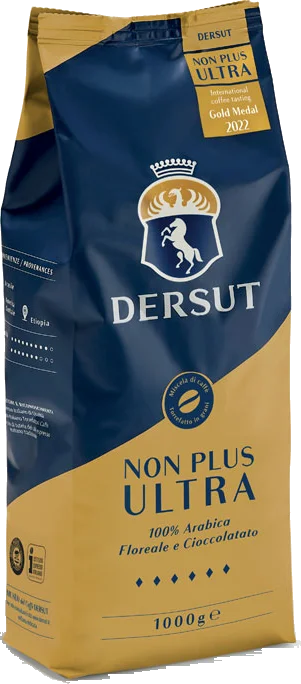
If you want to experience pure Arabica, Dersut Non Plus Ultra is the right choice: 100 % Arabica, mainly from Central America and the Horn of Africa, floral, with citrus freshness and cocoa on the finish, Gold Medal 2025.
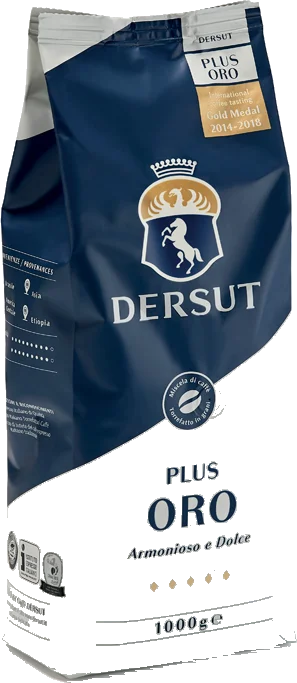
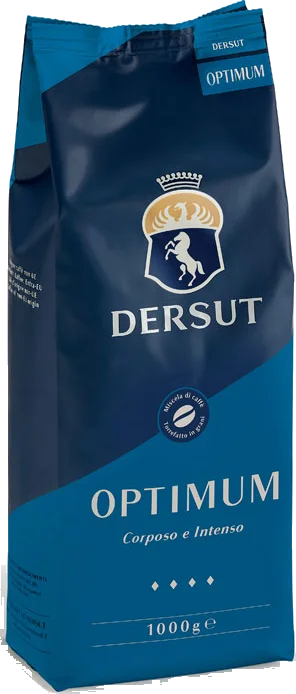
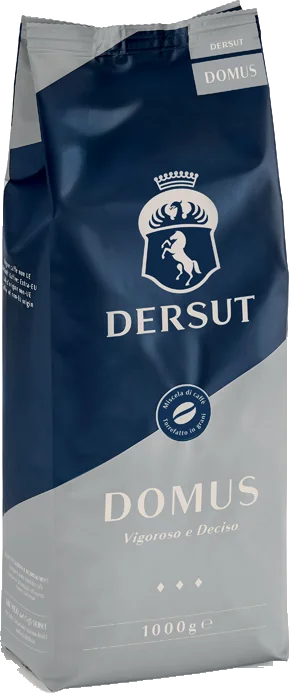
For the classic Italian balance of Arabica and Robusta there is the gold-medal Dersut Plus Oro and the versatile Dersut Optimum Rosso. If you want plenty of body and strength, choose Dersut Domus Marrone, Robusta and Arabica, the boldest blend. All four side by side: All four blends compared.
FAQ
Is Arabica better than Robusta?
Not automatically. Arabica is more aromatic and refined, Robusta brings body, crema and strength. Many of the best Italian espressos are blends of both.
Which species has more caffeine?
Robusta contains roughly twice as much caffeine as Arabica.
Why does espresso with Robusta have more crema?
Robusta gives a denser, more stable crema. That is why many Italian espresso blends contain a share of it.
Which Dersut blend is 100 % Arabica?
Non Plus Ultra. Plus Oro and Optimum Rosso combine Arabica and Robusta, while Domus Marrone is the boldest Robusta and Arabica blend.